
Which Knife Sharpener Should I Use?
The trick to choosing the right sharpener depends on your personal needs, and also on your skill level. While someone who has been sharpening knives a long time may feel perfectly at home freehand sharpening on a bench stone, someone new to sharpening will do better with a controlled-angle sharpening system. Let’s take a look at some of the more common sharpeners and their features.
Bench Stones 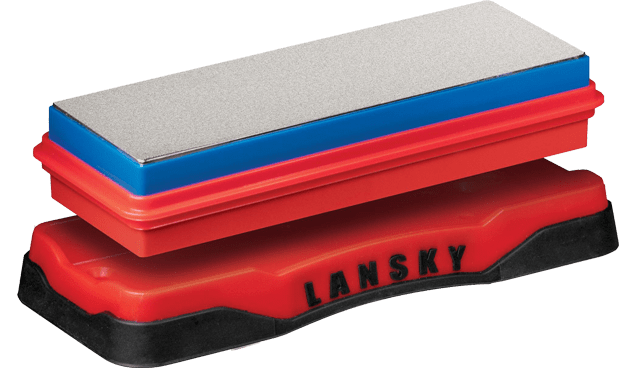
Bench stones are generally used by people more skilled at sharpening their knives. Using a bench stone is a freehand method of sharpening, which means you’ll have to “feel” for the right angle yourself. Bench stones come in a wide range of shapes, sizes and materials. There are diamond bench stones, ceramic, and natural stones like Arkansas.
Controlled-Angle Sharpening System 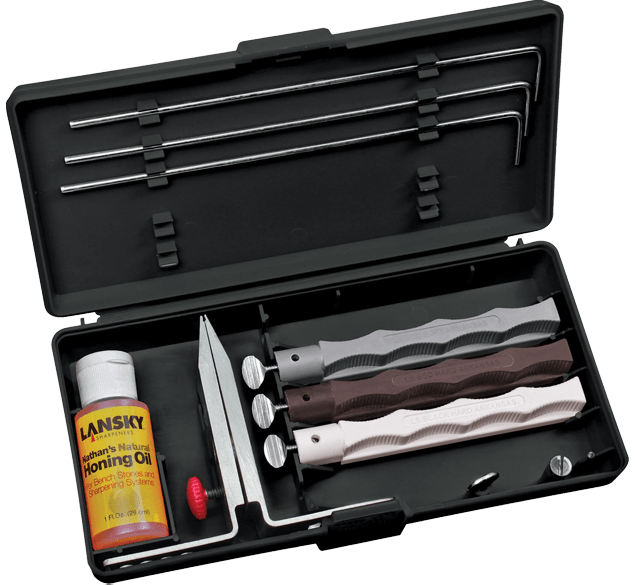
Designed by Arthur Lansky Levine over 35 years ago, the controlled-angle sharpening system is a guided system that will give your blade a professional, razor sharp edge. The kits include an ambidextrous knife clamp with guide holes for 17°, 20°, 25° and 30° sharpening angles. Once you attach the knife to the clamp, you’ll select the angle you need (see Which Angle Should I Use When Sharpening My Knife) and slide the guide rod through. This allows you to bevel or sharpen both sides of a blade to the same angles.
The controlled-angle sharpening system is perfect for regular users and beginners alike.
Sharpening Steels/Rods 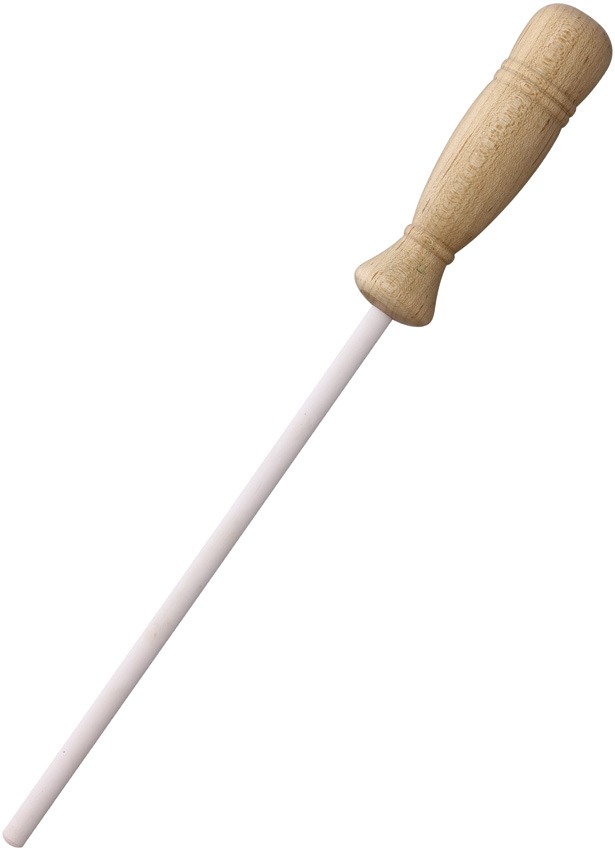
Sharpening steels or rods aren’t used for sharpening so much as they are for honing (preparing and maintaining an already sharp edge). These long, narrow rods minimize contact with the blade, so they don’t shave off much material.
They are best used for upkeep.
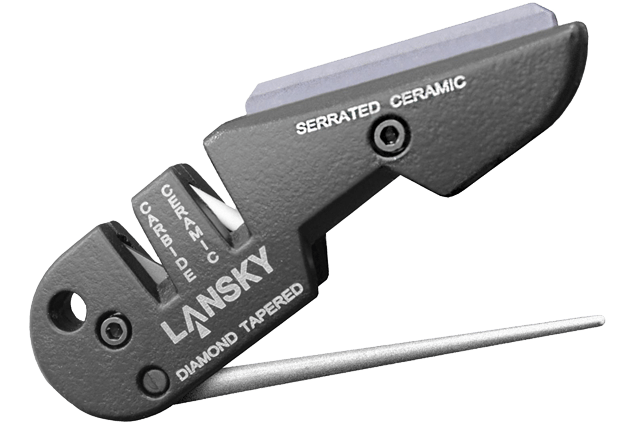 Pocket Sharpeners
Pocket Sharpeners are great to keep on hand. They are often used to quick-fix knives out in the field. Depending on the type of pocket sharpener, many can be used for regular knives, fillet knives, fish hooks, serrations and more. The Blademedic is a great example of a pocket sharpener that can handle each of these tasks by itself. It has four different sharpening options: one tungsten carbide v-groove, one diamond rod, one ceramic bench stone and another ceramic v-groove.
GRIT SELECTION & SHARPENING MATERIALS
Generally, the higher the grit number, the finer the edge. Lower grit numbers are coarser and more aggressive. To give you an idea of what grit selection might look like, here are the hones that come in the Lansky Deluxe 5-Stone System:
- Extra Coarse Hone (70 grit) for re-profiling your blade edge
- Coarse Hone (120 grit) for edge reconditioning
- Medium Hone (280 grit) for regular sharpening and occasional touch-ups
- Fine Hone (600 grit) for frequent touch-ups to keep your blade sharp
- Ultra-Fine Ceramic Hone (1000 grit) for polishing to a razor sharp edge
Common sharpening materials include tungsten carbide, diamond, ceramic & steel. A Tungsten Carbide Sharpener is ideal for lightning quick repairs. Ceramic rods can sharpen and the higher grits are great for polishing a finished edge. Diamond sharpeners are very aggressive and are best for quickly setting an edge or resetting the edge to a different angle. Diamond removes steel much faster than other sharpening materials. Sharpening steels are generally used for honing.
Also see:
Hot to Get a Polished Mirror Edge Using the Lansky System





